Licensed Master Social Worker
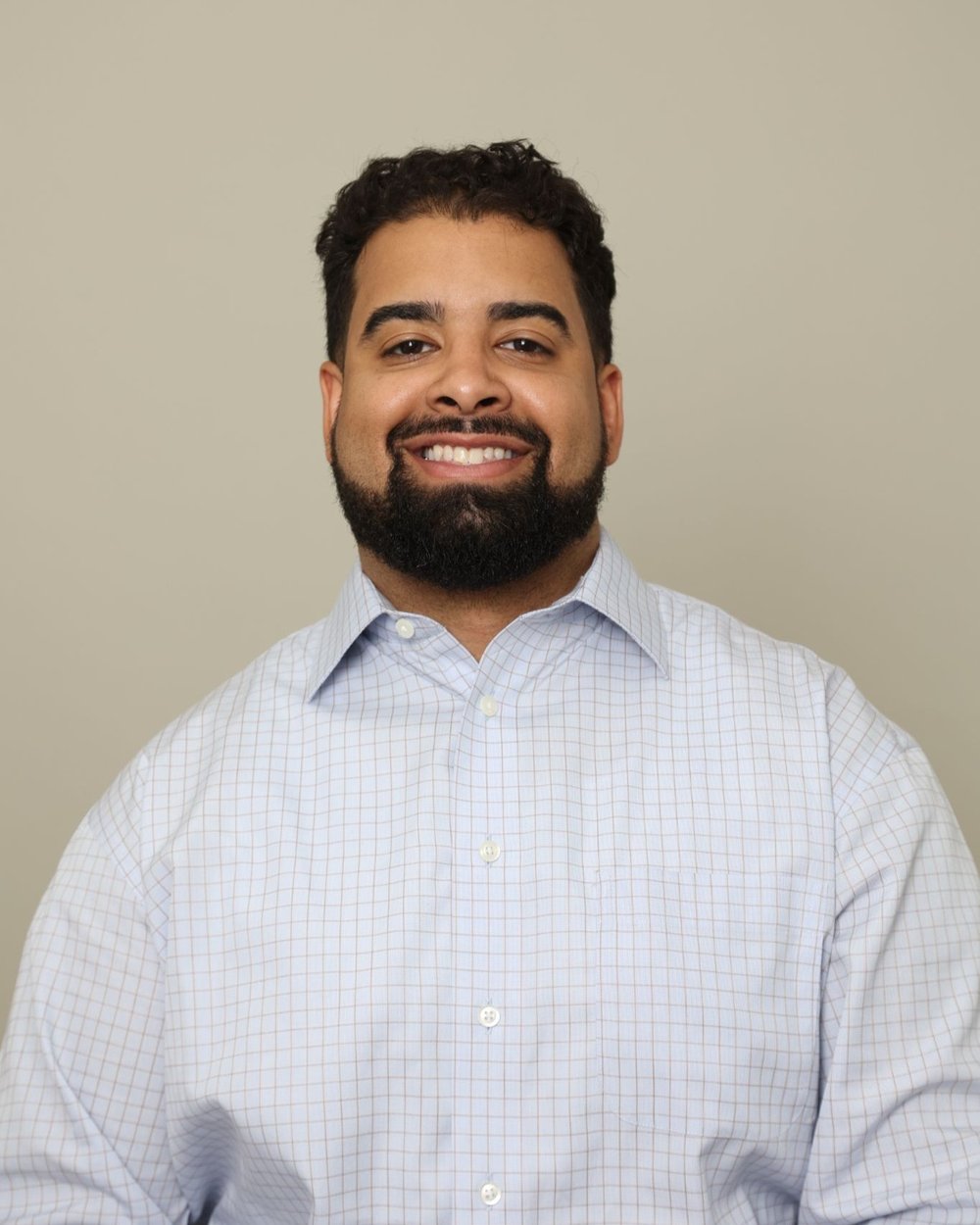
Carlos Espinal, LMSW
I work with children, adolescents and young adults and the parents raising them, and with men and fathers. Much of my work is with capable, high-achieving students under real pressure: a demanding school, a sport, the college process, and the question of who they are apart from all of it.
BiographyYoung peopleSiblings and twinsMen and fathersEn español
Biography
I earned my MSW at Fordham University, where I also hold the Specialized Practice Certificate in Crisis and Resilience. My clinical training was in a Bronx middle school, where I provided individual, group and family counseling, worked closely with parents and teachers, and saw many students with ADHD, autism and NVLD.
Before that I spent years in youth development with Cornell Cooperative Extension's 4-H program, providing academic advising, professional development and college preparation for high school students across New York City, including students at Townsend Harris, Stuyvesant, Brooklyn Tech and Bronx Science. I swam competitively in college and have coached swimmers for many years.
I am a Licensed Master Social Worker in New York and practice under the clinical supervision of Gregory Inzinna, PsyD. With him I co-lead a weekly group for adolescent boys, now forming. Credentials
Children, adolescents and their parents
Parents usually call when something has stopped working: a child who is bright and cannot stay organized or follow through, a teenager who has stopped talking, school that has become a daily argument, or a sense that a young person would simply benefit from another trusted adult. I see children, adolescents and young adults of any gender. Much of my work has been with boys.
Most young people did not choose to come. Someone made the appointment, and they arrive expecting to be told what is wrong with them. I do not argue with that. A teenager who says the problem is his parents is telling me something true about how things look from where he sits, and that is where I start. Pressure from one more adult rarely changes a young person's mind; a question he has not been asked before sometimes does. Once there is trust, I will challenge how he sees things, plainly and without contempt, and hold a standard he knows is real.
A good deal of the work happens between a young person and his parents, who are usually reacting to the same problem from opposite sides. I work with the young person on understanding himself and with the adults around him on how to support him.
Executive functioning and neurodivergence
Organization, time management, starting a task and follow-through are skills, and many capable young people have never been taught them. When a child knows what he is supposed to do and cannot seem to do it, the answer is rarely more pressure. Executive-functioning work is part of the treatment: we build a practical system for the schoolwork and the week, and we work on what gets in the way of using it, which is usually anxiety, perfectionism, avoidance, ADHD or conflict at home.
With children and adolescents with ADHD, autism or NVLD, the aim is for a young person to understand how his mind works, to build systems that suit it, and to learn to ask for what he needs. His strengths are the starting point.
High-achieving students and pressure
Many of the young people I see are not in trouble at all. They attend demanding schools, carry heavy schedules and care a great deal about doing well, and the difficulty is that it matters too much at the moment it counts: a student who knows the material and goes blank on the exam, an athlete or a musician who is better in practice than in competition, a junior for whom every grade has begun to feel like a verdict on the future. Pressure of this kind is not a flaw of character or preparation. It is a mind and body treating a challenge as a threat, and it can be worked on.
The work is concrete: what the pressure means to this particular young person, the habits that turn a challenge into a threat, and skills for staying present when it counts. With athletes it includes the parts of a season no one talks about: injury, being cut, and who you are if the sport ends. Parents and, where useful, coaches are part of the plan. Adults under the same pressure see Dr. Inzinna.
Siblings and twins
Siblings shape one another in ways that are easy to miss: who is compared with whom, which role each child settles into (the responsible one, the easy one, the one who struggles), and how much room there is to be different. I work with young people on these dynamics, and with parents on seeing and supporting each child as an individual.
Twins are a particular clinical interest of mine. Growing up alongside a sibling of the same age can bring close companionship and constant comparison at once, and questions about independence that other children meet later or less sharply. Parents of twins have their own questions, about fairness, about shared or separate classrooms, and about giving each child room to become their own person.
Men, fathers and Latino families
I also work with men and fathers. Some come because of what is happening in a marriage: an affair, or its discovery, has changed everything. Some are fathers who want to give their children a steadiness they did not have, and who catch themselves repeating what they promised never to repeat. Many have carried a great deal for a long time, for family here and often for family elsewhere, and have rarely been asked how they are doing.
The work is direct and practical. We look at what a man wants for his family and at the pattern in the way, whether a temper he did not choose, a silence he learned early, or the habit of handling everything alone. As a Latino man, I know the expectations many of these men grew up with: what a father is supposed to be, what is owed to family, and what a man is allowed to ask for. Sessions are available in Spanish.
How I work
The relationship comes first. Whether I am working with a young person, a parent or a man in the middle of a difficult year, the work depends on being understood, taken seriously and challenged without judgment. The work is practical, with concrete skills and plans, and it is also insight-oriented, because a pattern that keeps repeating usually has a reason. Dr. Inzinna and I work from the same model, Cognitive Behavioral Psychoanalysis, organized around the same four questions; within it I draw on cognitive behavioral therapy, acceptance and commitment therapy and mindfulness as they fit. I ask the people I work with to keep it to one day, one session, one decision at a time.
When a young person is my patient, we agree with the parents at the start on how they will be involved and what they will hear from me, and I protect the young person's privacy throughout.
En español
Trabajo con niños, adolescentes y adultos jóvenes y con los padres que los crían, y con hombres y padres de familia. Gran parte de mi trabajo es con estudiantes capaces y de alto rendimiento que viven bajo una presión real: un colegio exigente, un deporte, el proceso universitario, y la pregunta de quiénes son más allá de todo eso. Con los hombres, trabajo con lo que está pasando en el matrimonio, con los patrones que pasan de una generación a otra y con el hábito de cargarlo todo solo. Como hombre latino, conozco de cerca las expectativas con las que muchos crecieron.
Soy trabajador social con licencia (LMSW) en el estado de Nueva York y ejerzo bajo la supervisión clínica del Dr. Gregory Inzinna. Las sesiones son presenciales, los miércoles y los sábados, en nuestra oficina de East 89th Street. La primera conversación es una llamada telefónica gratuita de 15 minutos. Más información en español
Getting started
We begin with a free 15-minute phone call, on Monday, Tuesday and Thursday evenings. I see patients in person on Wednesdays and Saturdays at 160 East 89th Street, Suite 1B, at a standing weekly time, and the fee is $200 for a 50-minute session. If you would like to ask me something first, write to carlos@gregoryinzinna.com.